

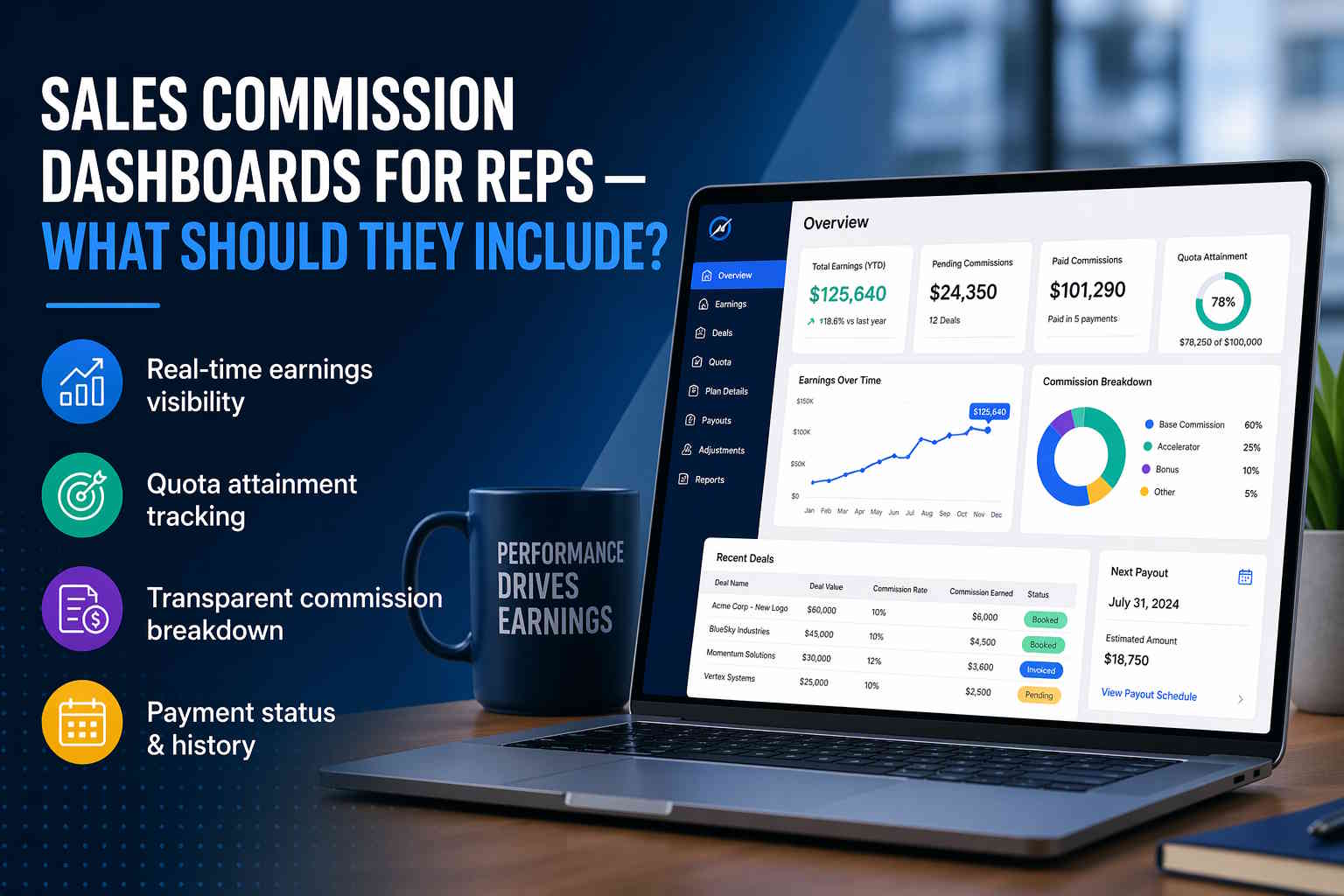
Sales commission dashboards are a cornerstone of modern revenue operations. As compensation plans grow more complex, sales reps need clear, real-time visibility into their earnings, performance, and progress toward quota.
A well-designed dashboard doesn’t just display numbers — it builds trust, reduces disputes, and drives performance. Dashboards that provide real-time insights into earnings and quota attainment help reps prioritize the right deals and improve results.
Why Sales Commission Dashboards Matter
Without a centralized dashboard, commission data often lives across spreadsheets, CRMs, and finance systems — creating confusion and inefficiency. Sales dashboards act as a single source of truth, helping teams track earnings, performance, and compensation structures in one place.
The benefits compound quickly:
- Improved transparency and trust
- Reduced shadow accounting by reps
- Fewer disputes with finance teams
- Higher rep motivation and productivity
Core Components Every Commission Dashboard Should Include
1. Real-Time Earnings Overview
Reps should instantly see total earnings, including:
- Year-to-date earnings
- Current period commissions
- Paid vs. pending payouts
2. Deal-Level Commission Breakdown
Transparency at the deal level is essential. Dashboards should show commission earned per deal, including the rate applied, revenue credited, and payout status. This ensures accuracy and builds confidence in payouts.
3. Quota Attainment Tracking
Quota tracking allows reps to measure progress and adjust behavior. Metrics like attainment percentage and remaining quota help align performance with earnings in real time.
4. Commission Plan Logic and Rules
Reps should understand how their commissions are calculated, including:
- Commission rates and tiers
- Accelerators and bonuses
- Rules for different deal types
Clear explanation of compensation logic is critical — opaque systems lead to confusion and mistrust.
5. Forecasted Earnings
Forecasting tools allow reps to estimate future commissions based on pipeline deals and potential performance scenarios, so they can prioritize the deals with the biggest payout impact.
6. Payment Timeline and Status
Visibility into payout timing — including scheduled payment dates and status — reduces uncertainty and improves trust between reps, finance, and payroll.
7. Adjustments and Clawbacks
Any changes to commissions (refunds, contract changes, churn-related clawbacks) should be clearly documented with explanations so reps understand why a balance moved.
8. Historical Performance Data
Historical insights help reps track trends, analyze performance, and improve future results. Year-over-year and period-over-period views are especially useful.
9. Filters and Drill-Down Capabilities
Interactive dashboards allow reps to filter data by date, deal type, product, or territory — making insights more actionable than a static report.
10. Mobile Accessibility
Modern sales teams require dashboards that are accessible on mobile devices for on-the-go visibility, especially during travel and quarter-end pushes.
Advanced Features That Drive Performance
- Scenario modeling: Estimate earnings based on potential deals and close-date assumptions
- Notifications: Alerts for payouts, milestones, and accelerator thresholds
- Gamification: Leaderboards and progress tracking to reinforce healthy competition
- CRM integrations: Real-time syncing with Salesforce, HubSpot, or other systems of record
Common Mistakes to Avoid
- Lack of transparency in calculations
- Delayed or outdated data
- Overly complex interfaces that hide the numbers reps care about
- Missing deal-level detail
The Business Impact of Strong Commission Dashboards
Effective dashboards provide real-time insights into earnings and performance, boosting motivation and accountability across sales teams.
Organizations that invest in transparent commission systems benefit from:
- Higher quota attainment
- Reduced operational overhead in finance
- Improved alignment between sales and finance
- Greater trust across teams
Choosing the Right Commission Dashboard Solution
When evaluating tools, prioritize platforms that offer real-time visibility, deal-level traceability, and scenario modeling. These features empower reps with clarity and reduce reliance on manual tracking inside spreadsheets.
For a deeper look at how to evaluate software in this space, see Easycomp’s guide: ICM Buyer’s Guide 2026: How to Choose Incentive Compensation Management Software.
Final Thoughts
Sales commission dashboards are no longer optional — they are essential infrastructure for high-performing sales organizations.
The best dashboards go beyond reporting. They provide clarity, explain calculations, and help reps understand exactly how to maximize their earnings.
If your sales team still relies on spreadsheets or frequently questions payouts, it is time to invest in a modern, transparent commission dashboard.